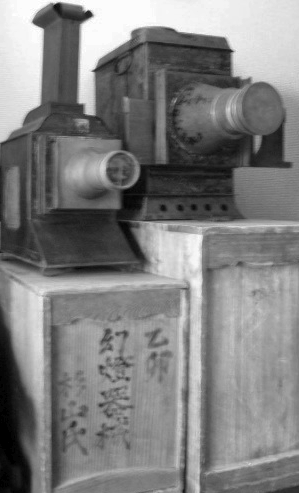
It is difficult to pinpoint the origin of animation in film, it is a hot topic for many cinema historians. The magic lantern show, as pre-cinema historians argue, is often pointed to being a precursor to true cartoons. The arrival of this show is unknown, examples have been known to have shown up in China as early as the 1670’s. As they reached Japan the Japanese found the European contraptions to be to weighty and unwieldy so they reconstructed them so that they could make the performances more dramatic and so they can incorporate more motion into the shows. However, due to the delicate nature of these items very few have made it into the modern era.
The Origin of Film and Animation in Japan
1905-1923
Japan’s first cinema theatre, the Denki-Kan in Asuka Tokyo was built in 1903. The creation of the theater was a major step in the early steps of cinema. By 1916 there were over 300 but most were focused in metropolitan areas such as Tokyo and Osaka, which ostracized the people in the countryside to the early advents of film. In these, often silent films, they were narrated by a person known as the Benshi. This person was not only the narrator, but the cinemas; barker, the town crier, and the literal interpreter of the film. In many cases he was considered the star. He helped to instill a sense of occasion in the production. The concept of the Benshi predates the film as similar people worked in the Japanese puppet shows and they were known as the Kamishibai.
The first mention of what appears to be animation was in the film known as Kimyō-naru Borudō (The Board Becoming Strange) which was shown in Tokyo’s Yachiyo-Kun theater on August 2, 1907. This film may have been a screening of a European film Humorous Phases of Funny Faces by Blackton. Another Film Nipparu No Henki (The Nipper’s Transformation), which may have been a retitling of the Émile Cohl’s (A French Caricaturist) Les Exploits de Fou Foller (Will O’ Wisps Exploits), on April 15 1912 at Tokyo’s Teikoku-Kan theatre, also had mentions that it might have been a cartoon. However information on these screenings are elusive and there are only fragments of each event to draw upon, from either audience reactions or often misleading posters.
The Dekobō Shin Gachō (Mischievous New Picture Books) is a series of films in which their origin is contested about. This film series may have had its origin in Charles Armstrung’s (A British Filmmaker) Film Isn’t this Wonderful!, other historians argue that due to the word Dekobō, which translates into mischievous, that these films may be related to Émile Cohl’s works due to the implication of confusion and surreality that was often seen in his early films. Due to the –bō suffix many might have interpreted it as a boy names, so they went to go see the series of films about the ongoing adventures of “Kid Deko.” They might have been lured back due to the titling of later films in the series, e.g. ‘Magic Chapter’. These films made their way to Japan in the 1917s and it was the leading influence in Japanese animators of that time.
The government was becoming more and more concerned with the growing influence of the film at the time. They were concurrent with socialist and anti-establishment that were growing in influence. Government officials were also growing concerned with the fact that the imperial heir, the future Taishō Emperer, was mentally unstable and he was liable to bring the throne into disrepute. As a result they began to censor films at the time and authorities tried to steer them down the “Right Path.”
During the advent of the Pure Film Movement, it was founded by young cinematographers, which began in the 1910s. They tried to start breaking away from traditional theatrical gesture, performance, and gender; they viewed it as a hindrance. The major problem was the Benshi which kept the films footed in the past. These ideals also started to fall into ideals of animators at the time. This was certainly the case with an exhibition of the films by the animators Kitayama Seitarō, whose venture in making cartoons was a major success. His first cut paper animation Saru Kani Kassen (1917 Battle of the Monkey and the Crab) was shown in two theaters which includes Denki-kan, the first Japanese cinema which is known for showing foreign films, which was considered a major achievement. The Pure Film Movement ideology doesn’t seem to be as clear as it was meant to be, it was indulgent of traditionalism in Japanese cartoons but it decries it in live action. It may be because the Pure Film Movement overlooked animation as it was then widely agreed that animation could never aspire to realism that was demanded in live-action film. Pure Film was often concerned with drama and realist documentation, but animation, from the 1910s and 1920s, kept to folk tales and allegories as a way to avoid the censoring of cinema at the time.
Locally made animation started to rise during a period of debate about the nature of cinema which was started due to the film Zigomar (1911), which was a film that glorified the exploits of a French master-thief. When children started to act out what they saw in this film, and it’s sequels, there grew to be unrest, as many feared their children were growing up to be ‘delinquents,’ and films began to be more carefully selected and children were barred from seeing certain films. Regulations were also put into place, such as baring the glorification of criminal acts, and anything that would cause children to otherwise misbehave. Due to these regulations most animations started to emphasize educational or instructional components. It didn't start harming the growth of animation until 1920s as the regulations started to kill some companies as they didn’t want to risk painstakingly creating an animation and having it bared from view.
Shimokawa Ōten may have been the first animator from Japan, however it is hard to discern as none of his films survived and there is only some accounts about this, mostly his own, to draw upon for information. These films were said to have been made between 1916-1917. Shimokawa claims to have had not heard about animated films despite being an apart of Japan’s cartooning establishment. He claims to be a solo inventor, and is most unlikely. His first animation techniques were similar to the works of European filmmakers Blackton or Cohl. He did dabble in the application of using machinery in film that would automate some parts of the drawing process, and these efforts may not have been entirely fictional as it is recorded in Shibata Masaru’s, a camera assistant, memoirs. However he would eventually give up in animation after his fifth film as neither he nor his patron found the effort fruitful.

The first purely animation studio, Kiayama Film Factory was founded in 1921 by Kitayama Seitarō. Kitayama was inspired to do animation after seeing an American animation, around 1915, and as a result he offered his services to do animation at the Nippon Katsudō Shashin (Japan Moving Pictures or Nikkatsu) in 1917. During this time he created twenty-two short films mostly about folk-tails from 1917-18. Most of these animations were created during his free time but he primarily worked on live-action films in Nikkatsu, in these films he began using animation effects not normally seen in film at the time, like on screen titles. He would eventually find loopholes in the censor during the time and he would use this to create public information films. He would make the longest animated film at the time, Tokubi Understands (1919), a film of comedic situations about how savings were to be protected an used during earthquakes and fires. This film is said to have been 30 minutes in length; however no copies of the film exist today.

Kitayama Seitarō
Denki-Kan Theater - Asakusa Tokyo
Magic Lantern Projector

Saru Kani Kassen 1917
Kitayama Seitarō
Katsudou Shashin – 1907
Artist Unknown
Magic Lantern Show
A magic lantern performance, utsushi-e. This Japanese art form uses lanterns (furo) and slides (taneita) to project brightly colored moving images on a large screen. Utsushi-e was introduced in Japan around 1800, but began to fall out of favor by the end of the 19th century.
Zigomar - 1911
Victorin-Hippolyte Jasset
Also known as the Matsumoto fragment
The Earliest Discovered Film Fragment from Japan